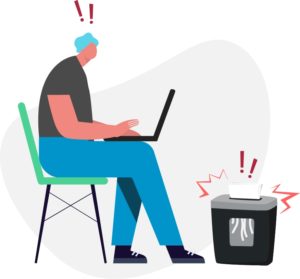

A clean desk policy sounds simple. At the end of the day, confidential paper should be put away, filed correctly or destroyed securely. Sensitive information should not be left where visitors, cleaners, contractors or other staff could see it.
In practice, offices are rarely that neat.
Invoices sit beside keyboards. HR forms wait in trays. Meeting notes are left beside printers. Old client files move from one desk to another because nobody is quite sure whether they should be kept, scanned, stored or shredded.
Clear rules make those small decisions easier.
Instead of leaving staff to guess, a clean desk policy gives everyone a simple way to handle paper before it turns into clutter, confusion or a data protection risk.
Why Clean Desk Policies Matter
Most businesses take digital security seriously. Passwords, access permissions, cloud systems and device controls all get attention.
Paper can be easier to overlook.
A printed document may contain names, addresses, payroll details, medical information, contract terms, bank details, customer records or internal business plans. If it is left on a desk, in a meeting room, beside a printer or in an open recycling bin, it can be seen or picked up by someone who should not have access to it.
Good paper habits reduce that risk by making document handling part of normal office behaviour.
They can also help with office organisation, shared workspaces, GDPR responsibilities, document disposal and internal record control.
The aim is not to make every desk look perfect. It is to make sure confidential paper has a proper place, a clear owner and a secure disposal route when it is no longer needed.

What Counts as Confidential Paper?
Any document that contains personal, financial, commercial or private business information should be covered by the policy.
This may include:
- Client files, contracts and application forms
- Employee records, payroll paperwork and HR notes
- Supplier invoices, bank details and financial reports
- Printed emails, call notes and meeting notes
- Medical, legal, insurance or account records
- Internal reports, tenders and pricing documents
- Visitor logs, delivery paperwork and sign in sheets
- Copies of ID, proof of address or other verification documents
Different records need different treatment. Some must be kept for a set period, while others may be working notes that can be destroyed once they have served their purpose.
Staff should not have to work this out on their own. A useful policy makes it clear what should be locked away, filed, scanned or sent for secure document shredding.

Where Paper Risks Usually Build Up
Confidential paper rarely becomes a problem because of one obvious mistake.
More often, the risk comes from ordinary daily habits.
A printer tray is left unchecked. A filing cabinet gets too full. A manager keeps old notes just in case. A team stores folders under desks because there is no better place for them. Someone clears a meeting room by putting paperwork into a normal bin.
These are common office behaviours, but they can still create avoidable risk.
The main problem areas are usually:
- Printers and photocopiers
- Reception desks
- Meeting rooms
- HR and finance areas
- Shared workstations
- Storage cupboards
- Archive rooms
- Open recycling bins
- Desks used by hybrid or part time staff
Your clean desk policy should name these areas clearly. It should also explain what staff need to do when confidential paper is found in the wrong place.
The Link Between Clean Desks and Secure Shredding
A clean desk policy is much easier to follow when staff have a simple way to dispose of confidential paper.
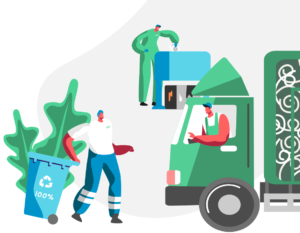
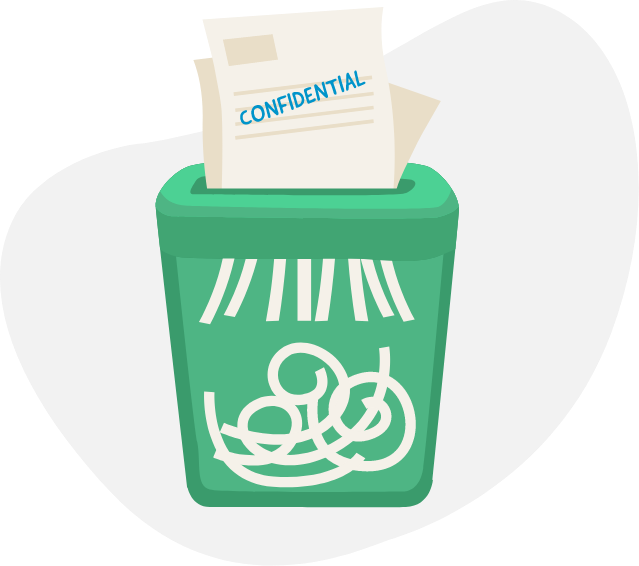
Rather than leaving documents in desk drawers or general waste bins, confidential paperwork should be placed into secure shredding consoles or locked bins ready for collection.
Providing a clear disposal process helps staff follow the policy consistently and reduces the risk of sensitive information being left unattended.
What Should a Clean Desk Policy Include?
The policy does not need to be long to be useful.
In fact, the best version is usually short, plain and easy to follow.
It should explain:
- What counts as confidential paper
- Where confidential paper should be stored during the working day
- What staff should do before leaving their desk
- How printed documents should be collected from printers
- What should never go into a normal bin or recycling box
- Where secure shredding consoles or bins are located
- Who to ask when staff are unsure whether a document can be destroyed
- How certificates of destruction are stored for internal records
Home working, shared desks and meeting rooms may need their own short rules too.
For example, staff who print documents at home should know whether those documents must be returned to the office or destroyed securely. Shared desk users should also know that no paperwork should be left behind at the end of a session.
Common Clean Desk Rules
- Lock confidential files away before leaving your desk.
- Collect printed documents promptly.
- Clear meeting rooms after every meeting.
- Do not leave paperwork beside printers or photocopiers.
- Keep visitor areas free from confidential information.
- Lock filing cabinets when not in use.
- Dispose of confidential paper through approved secure containers.
Keep the Policy Practical
The main reason these policies fail is that they feel like extra admin.
Staff are already busy. If the process is awkward, vague or too strict, people will work around it.
Better results usually come from matching the rules to how the office actually works.
Place secure consoles near the areas where paper is produced. Make printer checks part of the end of day routine. Give managers clear responsibility for high volume departments such as finance, HR and operations. Use simple wording in staff guidance, not legal language that nobody remembers.
Small changes make a difference.
A locked console beside a busy printer is more useful than a policy document buried in a shared drive. A short reminder during staff onboarding can also be more effective than a long email once a year.
Managers Set the Standard
A clean desk policy is more likely to succeed when managers follow it consistently.
If confidential files are regularly left on desks or meeting room tables by senior staff, others are less likely to treat the policy as important. Managers should lead by example by clearing paperwork at the end of the day, using secure storage and following the same document handling and disposal procedures expected of the rest of the team.
Clean Desk Habits for Hybrid Offices
Hybrid working has made paper control more complicated for many businesses.
Staff may move between home, the office, client sites and shared workspaces. Documents can be printed in one place, reviewed in another, then carried in bags or left in cars.
Your policy should reflect that reality.
For hybrid teams, it helps to set a few clear rules:
- Do not leave confidential paperwork in shared spaces
- Do not store work documents at home for longer than needed
- Do not dispose of client or company paperwork in household bins
- Return confidential paper to the office for secure disposal where required
- Avoid printing unless there is a clear business reason
- Use secure shredding for paper that is no longer needed
The aim is not to make hybrid work harder. It is to stop paper from slipping outside controlled office processes.

Should Your Office Use a Shred All Approach?
Some organisations choose a shred all policy, where unwanted workplace documents are placed into secure shredding containers rather than asking staff to decide whether each page is confidential.
For businesses handling large volumes of paperwork, this approach can reduce uncertainty and encourage consistent document disposal.
This approach can be useful for:
- Legal offices
- Accountants and finance teams
- Healthcare settings
- Insurance firms
- Recruitment agencies
- Education providers
- Offices with shared printers
- Businesses that handle regular client paperwork
It may not be necessary for every organisation, but it is often a simple way to reduce mistakes.

Do Not Forget Digital Devices
Paper is only one part of information security. Old laptops, hard drives, phones and other data bearing devices should also be disposed of securely when they are no longer required.
Many organisations review paper records and redundant IT equipment at the same time, particularly during office moves or clear outs.
Record Keeping Still Matters
No policy should encourage staff to destroy records that still need to be kept.
Some documents must be retained for legal, financial, operational or sector specific reasons. Others may be needed for customer service, audits, insurance, employment matters or contract management.
A document retention schedule helps avoid confusion.
The retention schedule explains how long different records should be kept. The clean desk policy explains how working documents are handled day to day. Secure shredding deals with confidential paper once it is no longer needed.
Together, these three parts create a clearer system.
Keep what you need. Protect it while you have it. Destroy it securely when the retention period has passed.
How to Introduce a Clean Desk Policy
You do not need a dramatic launch. Start with the areas where confidential paper is most common. Speak to team leaders. Look at where documents are printed, signed, reviewed and stored. Check where paper builds up at the end of the week.
The first version should be simple.
Tell staff what to clear from desks. Show them where secure shredding containers are located. Explain what should be locked away. Make it clear who can answer questions. Add a reminder to onboarding for new staff.
After a few weeks, review what is working.
Are printer trays still being left full? Are desks clearer at close of business? Are confidential bins in the right places? Are staff holding on to old documents because they are unsure about retention?
Any repeated problem usually points to a gap in the process. If staff keep getting stuck at the same point, the rule probably needs to be clearer or the disposal option needs to be easier.
How We Can Help
If your office is reviewing how confidential paper is handled, we can help you put a secure shredding process in place that supports the way your team already works.
Whether you need scheduled collections, a one off clear out, on site shredding or secure destruction for old data bearing devices, we can guide you towards the right service and provide proof of destruction for your records.
Make Confidential Paper Easier to Control
A clean desk policy does not have to be complicated. Clear expectations, sensible storage and an easy way to dispose of confidential paper help staff make the right decision every day.
When document handling becomes part of normal office routines, businesses reduce unnecessary risk while keeping workspaces more organised and professional.
If your business needs support with secure document disposal, Pulp can help you introduce a shredding process that fits your workplace and complements your clean desk policy.